VAT compliance is one of the most important ongoing obligations for businesses, yet it is also one of the areas where companies commonly face avoidable mistakes.
For many businesses, VAT becomes part of daily operations almost immediately after registration. Sales invoices, supplier invoices, reporting deadlines, accounting records, and financial reconciliations all connect directly to VAT compliance.
When processes are not properly structured, small inconsistencies can gradually become larger compliance problems over time.
In practice, VAT issues are often not caused by complex tax rules alone. They are frequently caused by operational gaps such as missing documentation, incorrect invoicing, delayed reconciliations, or inconsistent reporting processes.
Maintaining strong VAT compliance usually depends less on reacting at filing deadlines and more on maintaining organized workflows consistently throughout the year.
This checklist covers some of the main areas businesses should regularly review to help maintain stronger VAT compliance.
Ensure VAT Registration Details Are Correct
One of the first areas businesses should periodically review is whether their VAT registration details remain accurate and up to date.
This includes:
- legal company information,
- registered addresses,
- business activities,
- contact details,
- and operational structure.
Changes in business activity, turnover, or operational model may affect VAT obligations over time.
Businesses expanding internationally or introducing new services should also review whether additional VAT considerations may apply.
Maintain Proper VAT Invoices
Invoice quality is one of the most important foundations of VAT compliance.
Businesses should ensure invoices contain the required information, including:
- invoice number,
- invoice date,
- company details,
- customer details where applicable,
- VAT number,
- VAT amount,
- and accurate descriptions of goods or services.
Incorrect or incomplete invoices can create issues during reconciliations, audits, or VAT reviews.
Many businesses underestimate how often invoicing inconsistencies create downstream reporting problems later on.
Keep Supporting Documentation Organized
VAT reporting should always be supported by proper documentation.
Businesses should maintain organized records for:
- sales invoices,
- supplier invoices,
- receipts,
- import documentation,
- contracts,
- bank records,
- and supporting transactional evidence.
Even when transactions are legitimate, weak documentation can create unnecessary compliance risks.
One common operational issue is businesses relying heavily on email searches or scattered folders to retrieve records during reporting periods or reviews.
Maintaining centralized documentation processes usually reduces both reporting delays and compliance pressure significantly.
Reconcile VAT Regularly
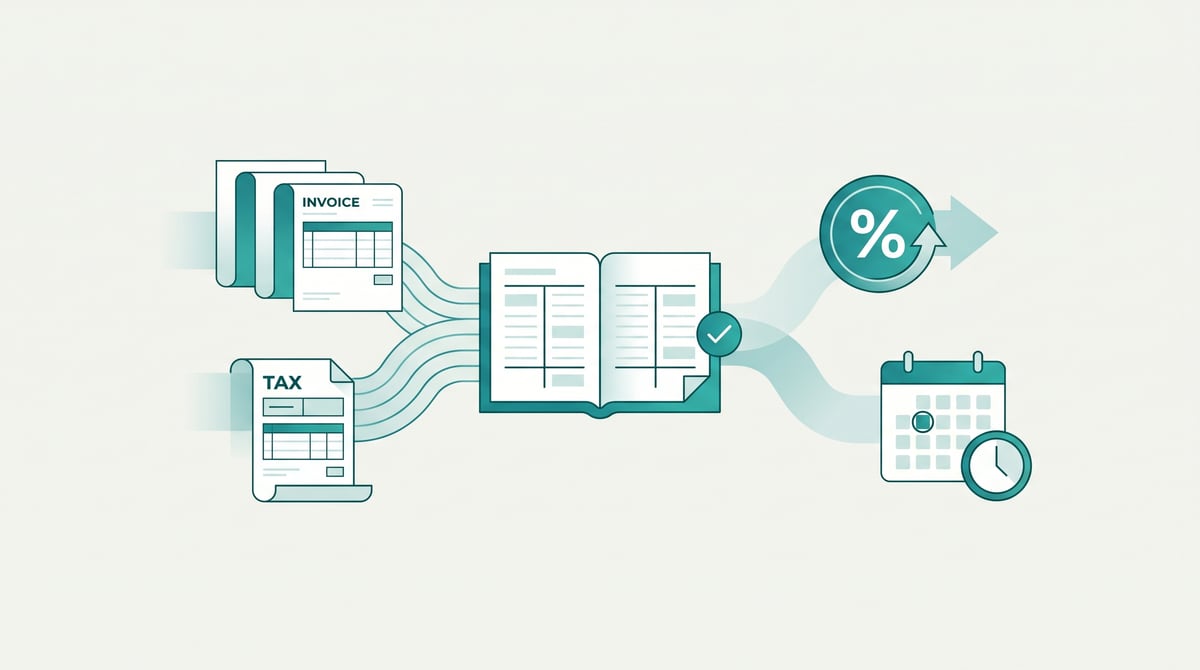
One of the most effective ways to reduce VAT issues is performing regular reconciliations rather than waiting until filing deadlines.
Businesses should regularly reconcile:
- VAT collected on sales,
- VAT paid on purchases,
- bank activity,
- accounting records,
- and submitted returns.
Regular reconciliations help identify:
- duplicate entries,
- missing invoices,
- incorrect VAT treatment,
- posting errors,
- or unusual balances early.
The longer discrepancies remain unresolved, the more difficult they often become to correct later.
Monitor VAT Filing Deadlines
Late VAT filings can result in unnecessary penalties, interest, and compliance complications.
Businesses should maintain clear visibility over:
- VAT return deadlines,
- payment deadlines,
- reporting periods,
- and supporting preparation timelines.
Many businesses experience filing pressure not because deadlines are unclear, but because supporting records are incomplete by the time reporting periods close.
Structured operational processes throughout the month often make VAT submissions significantly easier.
Review International Transactions Carefully
Cross-border activity can introduce additional VAT complexity.
Businesses dealing with:
- EU customers,
- international suppliers,
- digital services,
- imports,
- exports,
- or cross-border invoicing
should carefully review how VAT rules apply to those transactions.
Incorrect treatment of international activity is one of the more common areas where businesses unintentionally create compliance exposure.
As businesses grow internationally, VAT treatment often becomes more operationally sensitive.
Ensure Accounting Records Match VAT Returns
A common issue during reviews and audits occurs when VAT returns do not align properly with accounting records.
Businesses should periodically verify that:
- VAT returns match ledger balances,
- reported figures reconcile with financial statements,
- and adjustments are properly documented.
Inconsistencies between accounting records and submitted returns can create unnecessary scrutiny later.
Use Structured Accounting Systems
Manual spreadsheets and fragmented workflows increase the risk of VAT errors significantly as transaction volume grows.
Many businesses now rely on cloud accounting systems to improve:
- transaction visibility,
- invoice management,
- reconciliation processes,
- reporting accuracy,
- and document organization.
Well-structured systems can help reduce manual errors and improve overall compliance consistency.
However, software alone does not solve compliance problems. Internal processes and operational discipline remain equally important.
Common VAT Compliance Mistakes
Some of the most common VAT issues businesses face include:
- missing supplier invoices,
- incorrect VAT rates,
- duplicate entries,
- delayed reconciliations,
- incomplete documentation,
- late filings,
- and poor transaction classification.
In many cases, these issues develop gradually through inconsistent operational processes rather than intentional non-compliance.
Addressing small issues early is usually far easier than correcting larger historical discrepancies later.
The table below summarises the key review areas in this checklist alongside the practices that help keep each one compliant.
| Review area | Good practice to maintain |
|---|---|
| VAT registration details | Keep legal information, addresses, activities, and structure up to date |
| VAT invoices | Ensure invoices carry the required numbers, dates, VAT details, and clear descriptions |
| Supporting documentation | Maintain centralised, organised records rather than scattered folders or email searches |
| Reconciliations | Reconcile VAT on sales and purchases against bank activity and returns regularly |
| Filing deadlines | Track return and payment deadlines with adequate preparation time |
| International transactions | Review how VAT rules apply to cross-border sales, imports, and exports |
| Records vs returns | Verify VAT returns match ledger balances and financial statements |
| Accounting systems | Use structured systems to support visibility, accuracy, and document organisation |
If you would like to pressure-test these areas in your own business, an accounting health check is a practical way to identify gaps before they become reporting problems.
Why VAT Compliance Is Becoming More Operational
VAT compliance today is increasingly connected to operational structure rather than only year-end reporting.
As businesses grow, transaction volumes increase, systems become more interconnected, and cross-border activity expands, maintaining organized financial workflows becomes more important.
Strong VAT compliance often reflects broader operational discipline across the business itself.
Businesses with centralized financial processes, organized records, and consistent reconciliations generally experience fewer compliance issues and smoother reporting cycles overall.
Conclusion
VAT compliance is not simply about submitting returns on time. It depends heavily on maintaining organized financial records, structured workflows, accurate invoicing, and consistent reconciliations throughout the year.
For growing businesses especially, strong VAT processes help reduce operational risk, improve reporting accuracy, and create a more stable financial foundation over time. For tailored support across accounting, tax, and compliance, explore our accounting and advisory services.