
How Much Does Bookkeeping Cost in Malta?
If you've recently started a business in Malta, one of the first questions that usually comes up is simple: how much should bookkeeping actually cost?
The answer depends on the size of the business, transaction volume, VAT obligations, payroll requirements, and how involved the bookkeeping provider needs to be. In Malta, bookkeeping pricing can vary significantly depending on the complexity of the company and the level of ongoing support required.
At A4, managed bookkeeping starts from €24 a month for a self-employed person and €49 a month for a company at up to €10,000 of monthly expenses, including one bank account. This covers transaction recording, reconciliations, and basic financial maintenance.
As companies grow, costs naturally increase. The fee follows monthly spend in nine bands, up to €339 (self-employed) or €549 (company) above €500,000 a month with one account. Transaction volume adds €0 to €140 a month on top, each additional bank account is priced at €40 plus 15% of the monthly bookkeeping fee — the first is included — and payroll (€12 per person a month) and VAT returns (from €19 a month) are priced as their own lines. Every figure comes from the same fee schedule as our calculator, and all fees exclude VAT.
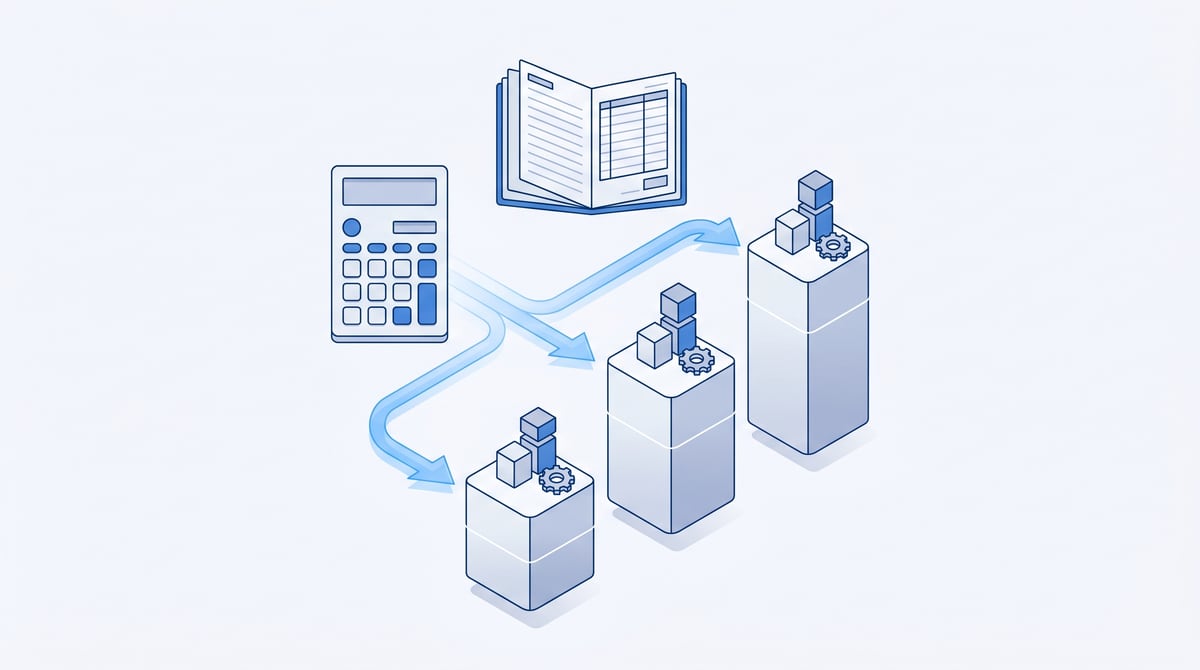
The table below summarises the indicative monthly ranges and what each tier typically covers.
| Business profile | Indicative monthly cost | Typically covers |
|---|---|---|
| Self-employed, up to €10,000 monthly expenses | from €24 | Transaction recording, reconciliations, basic maintenance, one bank account |
| Company, up to €10,000 monthly expenses | from €49 | Transaction recording, reconciliations, basic maintenance, one bank account |
| Higher spend, volume and complexity | up to €339 / €549, plus €0 to €140 for volume; each additional bank account €40 + 15% of the bookkeeping fee | Larger invoice volumes, multiple bank accounts; payroll (€12 per person) and VAT returns (from €19) added as separate lines |
One common misconception is that bookkeeping only exists for compliance purposes. In reality, bookkeeping forms the financial foundation of the business. Accurate records affect VAT submissions, management accounts, tax filings, cash flow visibility, audits, and overall decision-making.
Several factors usually influence bookkeeping costs in Malta:
- Number of monthly transactions
- Number of sales and purchase invoices
- Payroll requirements
- VAT obligations
- Industry complexity
- Frequency of reporting
- Use of cloud accounting systems
- Level of advisory or operational support included
For example, a self-employed consultant with minimal transactions will usually require far less ongoing work than a trading company managing inventory, suppliers, employees, and multiple reporting obligations.
Another factor affecting pricing is whether the business only needs basic record maintenance or more operational visibility. Some providers focus purely on compliance submissions, while others support businesses with reconciliations, management reporting, financial organization, and workflow coordination throughout the year.
Over the last few years, many businesses in Malta have also shifted toward cloud accounting platforms such as Xero and QuickBooks. These systems help streamline bookkeeping processes, improve collaboration, and provide better access to real-time financial information, and they are the foundation of structured automated bookkeeping.
While bookkeeping is often viewed as an operational expense, poor bookkeeping can become far more costly over time. Delayed reconciliations, inaccurate records, missing documentation, and weak financial visibility can lead to compliance issues, reporting delays, audit complications, and cash flow problems.
For growing businesses especially, bookkeeping should not simply be viewed as data entry. A well-structured bookkeeping process helps maintain operational clarity and creates a stronger financial foundation for scaling.
Ultimately, the right bookkeeping setup depends less on company size alone and more on the actual operational activity of the business. If you would like a tailored estimate for your company, get in touch with our team to discuss your requirements.